
How Tapping/Emotional Freedom Technique Works and Who Can Benefit from It

What is Tapping?
Tapping, also known as Emotional Freedom Techniques (EFT), is a simple yet powerful self-help tool that combines elements of traditional Chinese medicine and modern psychology. The technique involves tapping on specific points on the body, known as meridian points, while focusing on a particular issue or emotion. This process is believed to help release negative emotions and physical discomfort, promoting a sense of calm and well-being.
How Does Tapping Work?
Meridian Points: Tapping targets specific points on the body that correspond to energy pathways, or meridians, used in acupuncture. By tapping on these points, you can help balance the body's energy system.
Mind-Body Connection: Tapping works on the principle that our emotions and physical sensations are interconnected. When we experience stress or trauma, it can create blockages in our energy system, leading to emotional and physical issues. Tapping helps to clear these blockages, allowing for emotional release and healing.
Cognitive Focus: While tapping, you focus on a specific issue, such as anxiety, fear, or pain. This cognitive aspect helps you confront and process the emotions associated with that issue, making it easier to let go of them.
Relaxation Response: The act of tapping can trigger the body's relaxation response, reducing stress hormones like cortisol. This can lead to a decrease in anxiety and an overall sense of calm.

Who Can Benefit from Tapping?
Tapping can be beneficial for a wide range of individuals and issues, including:
Those Experiencing Anxiety or Stress: If you often feel overwhelmed or anxious, tapping can help you manage those feelings and promote relaxation.
Individuals with Emotional Trauma: People who have experienced trauma, whether recent or from the past, may find tapping helpful in processing and releasing those emotions.
Those with Physical Pain: Many people use tapping to alleviate physical discomfort, such as headaches, chronic pain, or tension. It can be a complementary approach alongside traditional medical treatments.
Children and Teens: Tapping is a great tool for younger individuals who may struggle with emotions like fear, sadness, or anger. It provides them with a simple way to express and manage their feelings.
Anyone Seeking Personal Growth: If you're looking to overcome limiting beliefs, improve self-esteem, or enhance your overall well-being, tapping can be a valuable addition to your self-care routine.
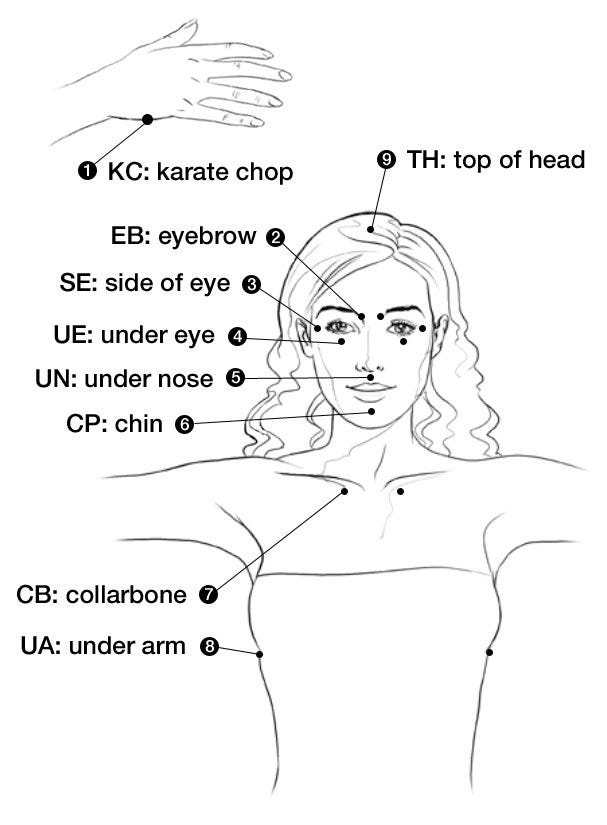
The Tapping Points Quick Reference
The Different Levels of Tapping

Surface Level Tapping:
This involves addressing immediate symptoms or feelings, such as stress, anxiety, or physical pain. It focuses on the most apparent issues that a person is experiencing at the moment. For example, if someone has a headache, they would tap on that specific symptom using straightforward reminder phrases like "This headache."
Analogy: The Band-Aid Think of surface level tapping like putting a Band-Aid on a cut. When you have a visible injury, like a scrape on your knee, you put a Band-Aid on it to protect it and help it heal. In tapping, this level focuses on immediate symptoms or feelings, such as stress or anxiety. You identify a specific issue—like feeling anxious about a presentation—and tap on it directly. Just like the Band-Aid helps you feel better while your body heals, surface level tapping provides quick relief from your emotional discomfort.
Emotional Level Tapping:
At this level, tapping is used to explore and address deeper emotional issues that may be contributing to physical symptoms or stress. This could involve tapping on feelings of sadness, anger, or fear that are linked to past experiences or traumas. The goal is to uncover and process these emotions to facilitate healing.
Analogy: Digging for Treasure Now, imagine you’re on a treasure hunt. You find a shiny object on the surface, but you know there’s more treasure buried deeper. Emotional level tapping is like digging down to uncover that hidden treasure. Here, you’re not just addressing the immediate feelings; you’re exploring deeper emotions tied to past experiences. For example, if you’re tapping on anxiety, you might discover that it’s linked to feelings of inadequacy from childhood. By digging deeper, you can tap on those underlying emotions, allowing for more profound healing.
Underlying Beliefs and Patterns:
This level focuses on identifying and addressing limiting beliefs or patterns that may be affecting a person's life. For instance, beliefs like "I am not worthy" or "I will never succeed" can be tapped on to help individuals shift their mindset and create positive changes in their lives. This level often requires more introspection and can lead to significant breakthroughs.
Analogy: The Roots of a Tree Think of this level as the roots of a tree. The visible part of the tree—the trunk and branches—represents your symptoms and emotions, while the roots are the underlying beliefs that support them. If you have a belief like “I’m not good enough,” it can affect many areas of your life, just like roots nourish a tree. In tapping, you work on these deep-seated beliefs, which can lead to significant changes in how you perceive yourself and the world. By addressing the roots, you can create lasting change, allowing the tree to grow strong and healthy.
Multilayered Tapping:
In the book “The Tapping Solution” author Nick Ortner emphasizes that many issues are multilayered, meaning that tapping on one aspect may reveal other underlying issues. For example, tapping on anger might lead to feelings of sadness or frustration, which can then be addressed in subsequent tapping rounds. This approach allows for a comprehensive exploration of the emotional landscape.
Analogy: Peeling an Onion Imagine peeling an onion. Each layer you remove reveals another layer underneath. Multilayered tapping is similar; when you start tapping on one issue, it may lead you to uncover other related issues. For instance, you might begin tapping on stress from work, but as you tap, you realize it’s connected to feelings of inadequacy from a past job. Just like peeling an onion, you keep going deeper until you reach the core of the issue. This process allows you to address multiple layers of emotional pain, leading to a more comprehensive healing experience.
Understanding the Structure of the Emotional Tree

The Emotional Tree is divided into four main components, each representing different layers of our emotional and psychological landscape:
Leaves (Symptoms/Side Effects):
The leaves of the tree symbolize the visible symptoms or side effects that we experience in our lives. These can include physical ailments, emotional distress, or behavioral issues. For example, someone might experience anxiety, chronic pain, or weight issues. The leaves represent the outward manifestations of deeper problems.
Branches (Emotions):
The branches represent the emotions that are often tied to the symptoms we experience. These can include feelings such as anger, sadness, fear, or anxiety. When we tap on our symptoms, it’s essential to also consider the emotions that accompany them. For instance, if someone has a headache, tapping might reveal underlying emotions like stress or frustration.
Trunk (Events):
The trunk of the tree symbolizes significant past events that have shaped our emotional responses. These events can be traumatic experiences, such as bullying, loss, or family conflicts. The trunk connects the leaves and branches, showing how past experiences influence our current emotional state and symptoms. Addressing these events through tapping can help individuals process and release the associated emotional pain.
Roots (Limiting Beliefs):
The roots of the tree represent the limiting beliefs that underpin our emotional responses and behaviors. These beliefs are often formed from past experiences and can include thoughts like “I’m not good enough” or “I don’t deserve happiness.” The roots are crucial because they provide the foundation for the entire tree. By addressing and changing these limiting beliefs through tapping, individuals can create lasting change in their emotional and psychological well-being.
How to Use the Emotional Tree
In the book “The Tapping Solution”, Ortner encourages readers to create their own Emotional Tree as a way to visualize and understand their emotional challenges. Here’s how to do it:
Draw Your Tree: Start by sketching a tree with leaves, branches, a trunk, and roots. This visual representation helps you see the connections between your symptoms, emotions, past events, and limiting beliefs.
Identify Your Leaves: Write down the symptoms or side effects you are currently experiencing. What physical or emotional issues are most pressing for you?
Explore Your Branches: Reflect on the emotions associated with those symptoms. What feelings come up when you think about your symptoms?
Examine Your Trunk: Consider significant past events that may have contributed to your current emotional state. What experiences have shaped your feelings and beliefs?
Dig Deep into Your Roots: Identify the limiting beliefs that may be influencing your symptoms and emotions. What negative thoughts do you hold about yourself or your situation?
The Emotional Tree concept is a powerful tool for self-discovery and healing. By visualizing the connections between symptoms, emotions, past events, and limiting beliefs, individuals can gain a clearer understanding of their emotional landscape. This understanding allows for more effective tapping sessions, as it encourages a comprehensive approach to addressing the root causes of emotional and physical challenges.
Guided Walkthrough
Tapping Protocol Instructions
Tapping Protocol for Children
Introduction
Tapping, or Emotional Freedom Techniques (EFT), is a fun and easy way for kids to feel better when they are upset, anxious, or scared. Here’s a simple guide to help children learn how to tap.
Steps for Children
Choose a Problem
Ask the child to think about something that makes them feel bad, like being scared of the dark or feeling sad about a friend. Encourage them to pick one specific problem to focus on.
Rate the Feeling
Have the child rate how strong their feelings are about the problem on a scale from 0 to 10, where 0 means they feel fine and 10 means they feel really bad. This helps them understand how much they want to feel better.
Create a Setup Statement
Help the child create a simple statement that describes their problem. For example: “Even though I’m scared of the dark, I love and accept myself.” Encourage them to say this statement three times while tapping on the karate chop point (the side of their hand).
Tap on the Points
Guide the child through the tapping points while saying a reminder phrase. Use the following points:
Eyebrow: Tap at the beginning of the eyebrow.
Side of Eye: Tap on the outer edge of the eye.
Under Eye: Tap directly under the eye.
Under Nose: Tap between the nose and upper lip.
Chin: Tap in the center of the chin.
Collarbone: Tap just below the collarbone.
Under Arm: Tap about four inches below the armpit.
Top of Head: Tap on the crown of the head.
As they tap, they can say something like, “This fear” or “This sadness” at each point.
Take a Deep Breath
After tapping through all the points, have the child take a deep breath to relax.
Reassess the Feeling
Ask the child to rate their feelings again on the 0 to 10 scale. Discuss any changes they notice.
Repeat if Needed
If they still feel upset, encourage them to repeat the tapping process until they feel better.
Tips for Kids
Make it fun! Use silly voices or pretend to be superheroes while tapping.
Encourage them to express their feelings openly and remind them that it’s okay to feel sad or scared.
Guided Video for Kids
Tapping Protocol for Adults
Introduction
Emotional Freedom Techniques (EFT), or tapping, is a powerful self-help tool that can help adults manage stress, anxiety, and emotional challenges. Here’s a detailed guide for adults to perform the tapping protocol.
Steps for Adults
Identify Your Most Pressing Issue (MPI)
Reflect on the specific issue that is causing you distress, such as anxiety about work, relationship problems, or physical pain. Write it down if it helps clarify your thoughts.
Rate the Intensity of Your MPI
Use the Subjective Units of Distress Scale (SUDS) to rate the intensity of your feelings about the issue on a scale from 0 to 10, where 0 means no distress and 10 means the highest level of distress.
Craft a Setup Statement
Create a setup statement that acknowledges your issue while affirming self-acceptance. For example: “Even though I feel anxious about my job, I deeply and completely accept myself.” Repeat this statement three times while tapping on the karate chop point (the outer edge of your hand).
Tap Through the EFT Sequence
Tap through the following eight points while saying a reminder phrase that encapsulates your MPI:
Eyebrow (beginning of the eyebrow)
Side of Eye (outer edge of the eye)
Under Eye (directly under the eye)
Under Nose (between the nose and upper lip)
Chin (center of the chin)
Collarbone (just below the collarbone)
Under Arm (about four inches below the armpit)
Top of Head (crown of the head)
Tap five to seven times at each point while repeating your reminder phrase, such as “This anxiety” or “This stress.”
Take a Deep Breath
After completing the tapping sequence, take a deep breath to help center yourself.
Reassess the Intensity of Your MPI
Rate the intensity of your issue again using the SUDS scale. Note any changes in your feelings or thoughts.
Repeat as Necessary
If the intensity is still high, repeat the tapping process. You can continue to tap on the same issue or move on to a different MPI as needed.
Additional Tips for Adults
Be patient with yourself; tapping may take time to show results.
Stay flexible; if new emotions arise during tapping, adjust your reminder phrases accordingly.
Incorporate tapping into your daily routine for ongoing emotional and physical well-being.